A “spirit animal” is commonly used today to mean an animal symbol a person feels connected to for guidance, identity, or reflection. But that modern phrase is also where the trouble begins: in some Indigenous cultures, relationships with animal beings can be part of specific living religions, kinship systems, ceremonial roles, and community responsibilities. Treating “spirit animal” as a universal label, a personality quiz result, or a costume-ready identity can slide quickly into disrespect and cultural appropriation.
This article untangles the most common meanings of “spirit animal,” explains why cultural context matters, and offers clearer, more respectful language for exploring animal symbolism before you ever click a commercial quiz.
Spirit animal meaning: the short version and the complicated truth
In everyday internet usage, “spirit animal” often means:
A symbolic mirror. An animal whose traits you admire or recognize in yourself.
A guide archetype. An image you turn to when you want courage, calm, boundaries, or momentum.
A pattern you notice. The animal that keeps showing up in dreams, art, conversations, or the actual landscape around you.
Those uses can be sincere. They can also be shallow. What makes the phrase complicated is that “spirit animal” isn’t just a cute metaphor everywhere. In some Native/Indigenous communities, animal relationships may be part of structured spiritual life and cultural identity. These are not generic, interchangeable, or publicly claimable practices—and they’re not best represented by a one-size-fits-all phrase.
So the key question becomes less “What’s my spirit animal?” and more “What tradition am I speaking from, and what do I actually mean?”
Where the phrase comes from, and why it’s contested
“Spirit animal” gained mass popularity in English-speaking pop culture as a casual way to say “I relate to that.” It’s now used the way people say “That’s so me,” especially online.
The problem is that the phrase often gets loosely connected to Indigenous spirituality as if there were one pan-Indigenous system where everyone has a personal animal assigned at birth, discoverable through a quiz. That framing flattens distinct nations, languages, and teachings into a single aesthetic.
Many Indigenous writers and educators have explained that “spirit animal” as a pop-culture concept frequently misrepresents or borrows from specific traditions without consent, context, or relationship. A respectful approach is to avoid claiming Indigenous frameworks unless you are taught within them by the community, in the way that community recognizes.
If you’re exploring animal symbolism for personal growth, you’re not blocked from doing that. You’re simply invited to do it accurately.
For practical boundaries, language choices, and the difference between appreciation and appropriation, see our guide: How to Explore Animal Symbolism Without Cultural Appropriation
“Spirit animal” vs. animal symbolism: a helpful distinction
One way to reduce confusion is to separate two ideas that are often blended together.
Animal symbolism (broad, cross-cultural) is the human habit of learning through animal imagery. People everywhere watch animals and draw meanings from their behavior: patience from a heron, cooperation from bees, vigilance from deer. This can be done respectfully without claiming a specific sacred lineage.
A spirit-animal concept (specific, tradition-bound) can refer to a relationship that exists inside a particular spiritual and cultural system, with its own protocols and meanings. It is not simply a vibe.
If you’re not practicing inside a specific tradition, the first category is usually what you’re doing—even if you call it a “spirit animal.” Using clearer terms helps you stay honest about the source of your meaning.
Better words to use (and when)
If your goal is self-reflection, you can keep the magic of animal imagery without the cultural blur. Here are alternatives that tend to be both accurate and considerate.
Animal symbol. Useful when you’re talking about themes and meanings.
Animal archetype. Useful when you’re drawing on psychology, myth, and storytelling.
Power animal. A term used in some modern neo-shamanic contexts; still worth using carefully and with clear attribution to modern practice rather than Indigenous tradition.
Animal ally. Useful when you want to emphasize relationship and respect, without claiming initiation or ceremonial authority.
Dream animal. Useful when the animal shows up primarily in sleep, not in waking life.
Messenger (symbolically). Useful when you’re treating the animal as a prompt for attention, not a supernatural guarantee.
This isn’t about policing language for its own sake. It’s about making your meaning more precise.
Cultural context: animal beings aren’t one story
Animal figures appear in religious life, folklore, and art all over the world. But they don’t mean the same thing everywhere.
In one culture, an owl may be linked with wisdom; in another, it may be connected to warnings, night powers, or death-related symbolism. In one tradition, a fox is a trickster; in another, it can be a sacred messenger. Even within a single country, meanings change by region, language, and era.
That’s why “My spirit animal is an owl, so I’m wise” is not only simplistic—it can be inaccurate even as symbolism.
If you want a comparative view that keeps traditions distinct rather than blending them, read: Animal Symbols Across Spiritual and Cultural Traditions
And if your interest is specifically owls and how their associations diverge, our owl piece emphasizes that contrast rather than treating it as universal: Owl Symbolism: Wisdom and Observation
What people usually mean when they say they “found” their spirit animal
In modern spiritual and personal-development spaces, people tend to arrive at an animal symbol through one of four routes.
Observation in real life
You notice an animal repeatedly in your day-to-day environment. Sometimes it’s mundane: you moved near a river and now see herons daily. Sometimes it’s emotionally charged: you see a deer on the morning you quit a job, or a fox on a night you finally take a risk.
A grounded way to work with this is to start with what’s literally true. Where do you keep seeing the animal? What is it doing? What do you feel when it appears?
Example: You keep seeing crows while you’re simplifying your life. Rather than declaring “Crow is my spirit animal,” you might explore crow symbolism as an invitation to examine what you’re collecting, what you’re discarding, and how you use your voice in groups.
Dreams and inner imagery
Animals in dreams can be startlingly vivid. A dream animal might represent instinct, fear, desire, protection, grief, play, or an emerging part of the self.
Here, humility is useful. Dreams aren’t a fixed dictionary, and animal images aren’t universal predictions. If you want a reflective approach that leaves room for uncertainty, see: What Does It Mean When You Dream About an Animal?
Myth, art, and story
Sometimes your “spirit animal” is the creature you’re drawn to in books, films, folktales, family stories, or childhood memories.
This can be meaningful precisely because it’s personal. But it’s worth asking: is this animal meaningful because of its behavior in nature, or because of a particular story tradition you’re borrowing from? If it’s the second, name the tradition when you share it.
A quiz, a reading, or an algorithm
Online quizzes often work like flattering mirrors: they give you an animal that matches traits you already like about yourself. That doesn’t make them evil, but it does make them limited.
A quiz can be a prompt. It should not be treated as a spiritual credential, a tribal identity, or a fixed label that overrides culture and context.
If you’re curious about our approach, you can start with the introduction here: About Spirit Animal Sketch & Reading
How to work with an animal symbol respectfully and usefully
You don’t need to turn animal symbolism into a rigid identity. The most helpful approach is relational and specific.
Start with the animal’s real-world nature
Before you assign meanings, learn a little about how the animal lives.
What does it eat?
How does it protect itself?
Is it solitary, social, territorial, migratory?
Is it active at dawn, day, dusk, or night?
This matters because symbolic insight is stronger when it grows from reality rather than stereotype.
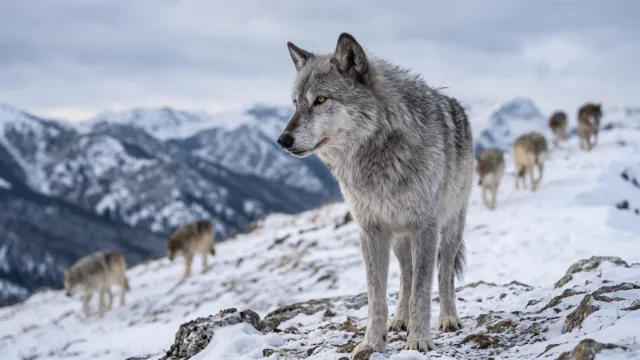
Example: If you’re drawn to wolves, it’s easy to jump straight to “loyalty” or “alpha” clichés. A more nuanced reflection starts with what you actually mean by loyalty in your life: loyalty to whom, at what cost, and with what boundaries? Our wolf article stays grounded in those themes without claiming universal sacred authority: Wolf Symbolism: Loyalty, Independence, and Instinct
Turn the symbol into a question, not a claim
Instead of announcing “This animal is my spirit animal,” try a question that keeps you honest:
What part of me is asking for this animal’s qualities right now?
What situation in my life resembles this animal’s survival strategy?
What fear or desire does this animal stir in me?
What boundary, instinct, or tenderness do I avoid—and does this animal bring it closer?
Symbols work best as prompts that deepen self-knowledge.
Track timing and repetition without forcing meaning
If an animal keeps showing up over weeks or months, you can explore what was happening during those times.
But repetition doesn’t require a cosmic conclusion. Sometimes it’s simply seasonal migration, a change in your commute, or an increase in your attention because an image resonated once.
You can hold both: the practical cause and the personal meaning.
Avoid identity shortcuts
A common pitfall is turning an animal symbol into a personality badge.
I’m a fox, so I’m clever.
I’m an eagle, so I’m free.
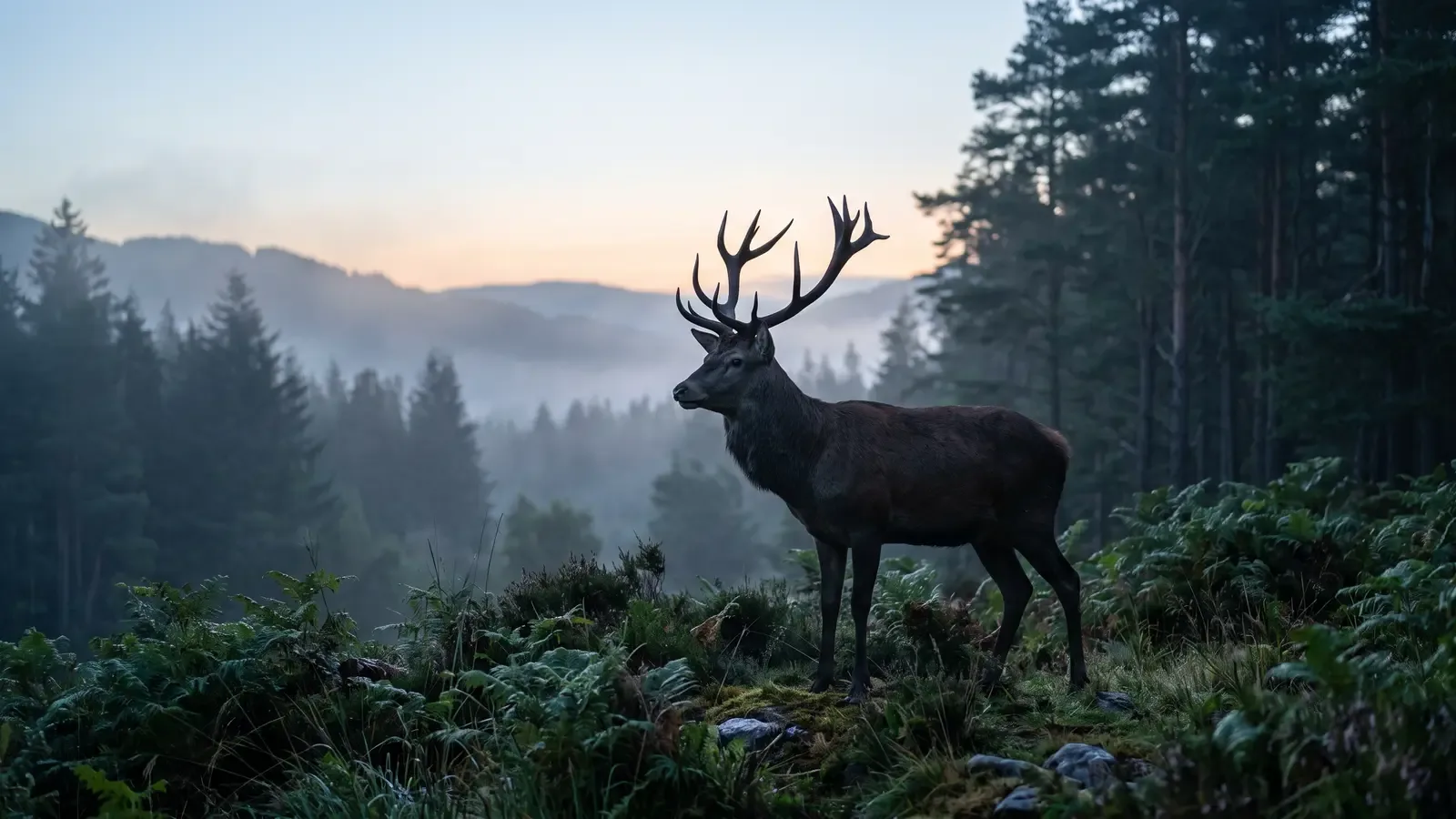
I’m a deer, so I’m gentle.
Real growth comes when the symbol challenges you, not just when it flatters you.
If deer symbolism attracts you, for instance, the deeper work might be noticing when gentleness becomes self-erasure, or when vigilance becomes anxiety. Our deer article leans into that observational kind of reflection: Deer Symbolism: Gentleness and Awareness
The commercial quiz question: why it can feel meaningful anyway
Even a lighthearted quiz can land emotionally, and there’s a reason. Animals give the psyche a language that’s older than self-help jargon.
An animal image condenses a complex story into something you can feel.
A turtle isn’t just “patience.” It’s slowness with protection.
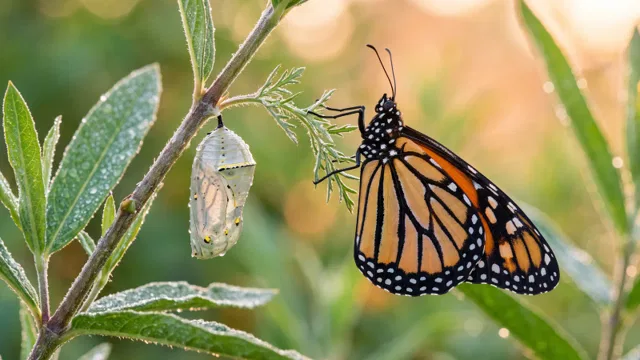
A butterfly isn’t just “change.” It’s change with irreversible stages.
An owl isn’t just “wisdom.” It’s seeing in the dark—sometimes at a cost.
When a quiz result hits, it may be because it names a quality you’re ready to integrate. The respectful next step is to treat the result as a starting point, then do the real work: learn the animal, reflect on your context, and choose language that doesn’t borrow authority from cultures you’re not part of.
If you’re drawn to transformation symbols, you might also enjoy our butterfly exploration, which keeps meanings personal and culturally specific rather than universal: Butterfly Symbolism: Transformation and New Beginnings
A simple personal practice that stays within clear boundaries
Choose one animal you feel drawn to right now. Not for life. Not as a label. Just for this season.
First, write what’s factual. Where did you encounter it? What exactly happened?
Next, write three traits that are observable in the animal’s behavior or ecology.
Then, write three ways those traits show up in your life as strengths.
Finally, write three ways those traits could show up as imbalances.
You’ve now turned “spirit animal meaning” into a grounded self-reflection tool—without needing to claim a tradition that isn’t yours.
If you want to go deeper with guidance, you can begin with the free introduction to our spirit-animal reading page: About Spirit Animal Sketch & Reading
What to remember before you use the phrase
If you use “spirit animal” casually, it can accidentally imply you’re drawing from Indigenous spiritual authority.
If you love animal symbolism, you don’t have to give it up. You can refine it.
The most respectful path is specificity: name your source, choose accurate language, and let the animal be a teacher rather than a costume.
In the end, the meaning that lasts is the meaning you can live: a practical insight, a clearer boundary, a truer value, a wiser next step—carried in the vivid, honest mirror of the animal world.
Sources & further reading
Sources provide context for the specific topics discussed. They do not establish supernatural claims or endorse the reading experiences.