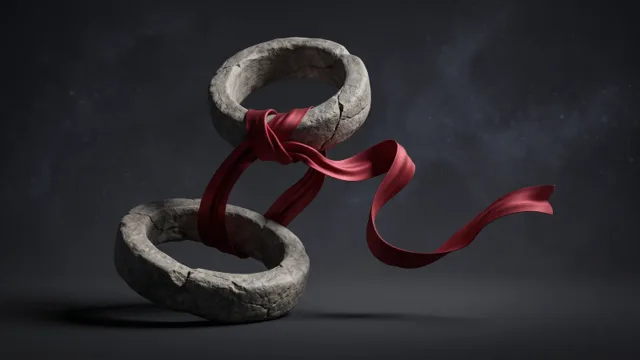
Past-life beliefs appear across many cultures, but they don’t mean the same thing everywhere. In some traditions, rebirth is a structured part of religious life tied to ethics and liberation; in others it’s a philosophical puzzle, a mystical possibility, or a modern spiritual metaphor for personal healing. Treating these views as one universal “reincarnation belief” flattens the very details that make them meaningful.
This article maps historically rooted approaches to past lives across a range of cultures and religious traditions, emphasizing differences in purpose, practice, and language. It also notes where modern “past-life” talk departs from older sources—especially when ideas move into self-help, relationship labels, or entertainment.
A note on words: reincarnation, rebirth, transmigration
English tends to bundle everything under reincarnation, but traditions often make sharper distinctions.
Rebirth is commonly used in Buddhist contexts because it doesn’t always imply a permanent soul traveling intact from body to body. The continuity is often described as causal and conditioned rather than a fixed “self” migrating.
Reincarnation is frequently used for Hindu and many modern metaphysical teachings where an enduring spiritual principle is assumed to take new bodies.
Transmigration is an older philosophical term used in Greek and later Western writing, often emphasizing the “movement” of the soul.
Using a tradition’s preferred term is more than politeness: it changes what a past life is for. Is it a moral education? A cosmic accounting? A chance event in an immense universe? A symbol for inner change?
South Asia: karma, rebirth, and the aim of liberation
Hindu traditions: samsara, karma, and moksha
Across many Hindu schools, the broad framework is samsara (the cycle of birth and death), karma (action and consequence), and moksha (liberation). The idea is not just “you lived before,” but that existence itself is patterned by cause-and-effect across lives.
Within Hindu thought, there are many metaphysical models. Some schools emphasize an enduring self (atman) that continues; others debate what exactly carries forward. But the shared emphasis is practical and ethical: how one lives shapes future conditions, and spiritual practice aims to loosen bondage to the cycle.
Past lives in this context are not primarily entertainment or romance confirmation. They are part of a moral and spiritual universe, often tied to dharma (right living, duty, the order of things). In devotional forms, the focus may be less on detailed past-life biography and more on relationship to the divine, virtue, and liberation.
Jainism: a rigorous ethics of rebirth
Jain traditions also accept rebirth and karma, but karma is often described with striking specificity—as a subtle matter that binds to the soul through action, intention, and attachment. The ethical demands are famously stringent: nonviolence, truthfulness, non-stealing, chastity, and non-attachment are not merely virtues but technologies of liberation.
In this framework, “past lives” can underscore responsibility, but it’s not meant to become a tool for blaming people for suffering. Rather, it’s an ethical call: reduce harm, reduce attachment, and work toward liberation from the cycle.
Sikhism: rebirth language alongside devotion, and cautions about speculation
Some Sikh teachings and later Sikh interpretive traditions include the idea of the soul’s passage through cycles of birth and death, while the tradition’s core emphasis is devotion to the One, remembrance of the divine name, ethical living, humility, and service. In many Sikh contexts, teachers caution against getting absorbed in speculative curiosity. The emphasis is commonly placed on how to live now—truthfully, courageously, in service—rather than on constructing elaborate narratives about who one “used to be.”
This difference matters when modern culture treats past-life stories as identity badges. In many devotional settings, a frequently noted spiritual risk is pride and distraction.
Buddhism: continuity without a fixed self
Buddhism is one of the most commonly cited sources for “past life” belief, yet it is also where modern pop-language can miss the point.
In many Buddhist teachings, there is no permanent, independent self that survives unchanged. Instead, rebirth is described through dependent origination: experiences arise due to causes and conditions, and those causal streams continue even as forms change.
That means the question “Which famous person was I?” is often beside the point. The deeper question is: what patterns of craving, aversion, and ignorance keep repeating? What alleviates suffering?
Traditional Buddhist literature includes stories of the Buddha’s previous lives (Jataka tales). These are often moral narratives illustrating virtues like generosity, patience, and wisdom. They are not presented as a consumer quiz; they function as teaching stories.
If you’re drawn to past-life ideas for self-reflection, one grounded way to approach it—without claiming proof—is to treat “past-life language” as a mirror for recurring patterns. Our related piece on respectful exploration keeps this distinction clear: How to Explore Your Personal Soul Story Through Reflection.
Ancient Greece and the Mediterranean: philosophy, mystery, and moral training
In the ancient Greek world, ideas resembling reincarnation appear in philosophical and religious currents rather than a single unified doctrine.
Pythagorean and later Platonic thought includes versions of the soul’s immortality and its journey through multiple lives. Plato’s Myth of Er, for example, dramatizes moral consequence and choice across lifetimes in a visionary story. These accounts sit at the intersection of philosophy and myth: they explore ethics, the nature of the soul, and the consequences of living without wisdom.
Some mystery religions and later Hellenistic currents also explored purification and the soul’s fate after death. But it’s crucial not to treat “Greek reincarnation” as identical to South Asian karma and rebirth. Greek models often focus on the soul’s education, cosmic order, and philosophical purification—sometimes with a different sense of divine structure and a different moral mechanics than classical Indian karma theory.
Abrahamic religions: generally not reincarnation, with notable minority streams
Mainstream Judaism, Christianity, and Islam are generally not organized around reincarnation doctrines. They tend to emphasize one life, death, judgment, and an afterlife, though beliefs about the afterlife vary widely among denominations.
That said, minority or esoteric streams have, at times, held reincarnation-like ideas.
Judaism: gilgul in some Kabbalistic traditions
Within certain Kabbalistic teachings, gilgul (often translated as “cycle” or “transmigration”) appears as an explanation for spiritual rectification. This is not the same as saying “Judaism teaches reincarnation” in general. It is a strand within Jewish mysticism, interpreted differently across communities.
Christianity: contested and largely outside orthodoxy
Early Christian history contains debates about the soul and pre-existence, and later esoteric or mystical movements have sometimes adopted reincarnation ideas. However, reincarnation is not a standard doctrine of mainstream Christianity. When modern spiritual writing claims that “Christianity originally taught reincarnation,” that is a strong claim and usually reflects selective reading or fringe interpretations rather than broad historical consensus.
Islam: generally rejects reincarnation
Most Islamic theology emphasizes a single earthly life followed by resurrection and judgment. Some esoteric philosophies in the broader Islamic world have entertained unusual metaphysical ideas, but these should not be generalized as normative Islamic belief.
The practical takeaway: if you come from an Abrahamic background and feel pulled toward “past lives,” you may be navigating not just a spiritual curiosity but a shift in theological framework. It can help to name that difference openly, rather than forcing a retrofit.
China and East Asia: ancestral continuity, karmic causality, and blended religious worlds
In parts of Chinese and wider East Asian religious life, beliefs about what continues after death have often been shaped by more than one stream: Buddhist teachings on rebirth (as they developed in East Asia), Daoist ritual and cosmology, and a range of local/folk religious practices.
Buddhist rebirth and karmic causality became influential in many communities, including rich imaginations of after-death realms and moral consequence. Daoist traditions include varied views of spirit, immortality, and the refinement of life-force that don’t always map neatly onto “reincarnation” as the term is used in English. Many folk practices emphasize ancestors, family continuity, and obligations between the living and the dead.
Compared with some modern Western past-life fascination, the focus in these settings is often less on personal biography across centuries and more on relational continuity: ancestral care, ritual responsibility, and family/community ties.
Modern Theosophy and New Age spirituality: past lives as a personal narrative tool
A large portion of today’s English-language “past-life” conversation comes not directly from ancient texts but from modern esoteric movements. Theosophy (late 19th century) popularized a syncretic, globalized reincarnation model for Western audiences, drawing selectively from Hindu and Buddhist ideas and reinterpreting them alongside Western occultism.
Later New Age spirituality often reframed past lives as an explanatory story for personality traits, fears, talents, and relationship dynamics. In this modern setting, past lives can function as a mythic autobiography: a way to organize memory, longing, identity, and meaning.
This can be creative and psychologically resonant, but it is not the same thing as historically situated religious doctrine. It also carries risks when it becomes overly literal, commercially pressured, or used to label relationships in ways that override consent.
If your interest is specifically in how readings are conducted today—what a practitioner might do, how to set boundaries, and how to treat results responsibly—see What Is a Past-Life Reading?.
Why cultures hold past-life beliefs: different spiritual jobs, not one shared answer
Across traditions, “past lives” tend to do one or more of these jobs, but in different proportions.
Ethical reinforcement
In karma-based systems, the past-life idea stabilizes moral meaning across time. Actions matter beyond immediate consequences.
Liberation framework
In Hindu, Jain, and Buddhist contexts, rebirth often isn’t “good news.” It can be the problem. The spiritual goal is freedom from compulsive cycling.
Identity and purpose
In modern spirituality, past lives often provide identity language: “This explains why I’ve always felt like an outsider,” or “This explains my fascination with a place.” This can be meaningful without being historically verifiable.
Relationship interpretation
Some contemporary communities use “karmic” or “past-life” labels to explain attraction and conflict. Used carefully, that can be a prompt for reflection; used carelessly, it can justify unhealthy dynamics. For a focused look at that modern trend, read What Does a Karmic Relationship Mean?.
Community continuity
In many cultures, the key question is not “Who was I?” but “How do the living and dead remain in relationship?” That can show up through ancestral remembrance more than reincarnation.
What about déjà vu, “instant familiarity,” and memory?
Many people meet the idea of past lives through an experience: déjà vu, a powerful recognition, an unexplained fear, a recurring dream. Cultures interpret these experiences differently, and modern psychology offers non-spiritual explanations for some of them.
It’s possible to hold both with integrity: a spiritual interpretation as personal meaning, and a scientific one as mechanism—without forcing either to prove the other. If you want that side-by-side approach, see Déjà Vu and Past-Life Interpretations: Belief vs. Science and Why Do Certain People Feel Instantly Familiar?.
A respectful way to explore past-life beliefs without flattening them
Start by asking which tradition you mean
If you’re reading a claim online, identify whether it’s Hindu, Buddhist, Jain, Greek philosophical, Kabbalistic, or modern New Age. The assumptions change immediately.
Separate doctrine from modern spiritual language
Terms like soul contract, karmic partner, or twin flame are modern categories in popular spirituality. They may borrow words like karma or soul, but they aren’t identical to classical teachings. If you want the modern context and limits, our companion piece What Is a Soul Contract in Spiritual Traditions? keeps the boundaries clear.
Use past-life ideas as reflection, not verdict
A constructive approach is to treat the past-life concept as a story-container for themes: fear, longing, loyalty, unfinished conversations, moral intention. You can work with the theme without declaring it factual history.
Avoid “recovered memory” pressure
If you explore guided meditations, journaling, or readings, prioritize consent, pacing, and emotional safety. You never need to force a vivid narrative. Sometimes the most honest outcome is simply: “I don’t know, but the symbol moved me.”
If you want to go deeper: a gentle starting point
If you’re curious about your own “soul history” in a way that stays reflective rather than absolute, begin with our Soul Archive introduction here: Free Soul Archive Reading Information. It’s designed as a starting doorway—an invitation to reflect on patterns and meaning—without turning your life into a claim that must be proven.
Past-life beliefs are best approached the same way they developed across cultures: with patience, moral seriousness, and respect for the worldview they come from. The question isn’t only whether past lives are “real” in a literal sense; it’s also what the belief is trying to teach, heal, or orient—and whether that guidance helps you live with more clarity and care now.
Sources & further reading
Sources provide context for the specific topics discussed. They do not establish supernatural claims or endorse the reading experiences.